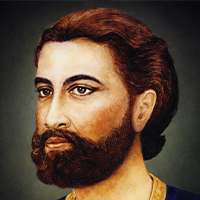
Profile of Mir Taqi Mir
Detailed Bio:
Mir Taqi Mir: The Life and Legacy of Khuda-e-Sukhan Ask anyone who knows classical Urdu poetry who stands at the very top, and they won't name Ghalib first. They will say Mir. Even Ghalib famously admitted that anyone who couldn't appreciate Mir wasn't truly a master of verse. Known by the title Khuda-e-Sukhan (The God of Poetry), Mir Taqi Mir took personal tragedy and the violent fall of the Mughal Empire and turned them into some of the most heartbreak-stained ghazals ever penned. Early Loss and the Search for Survival Born Mohammad Taqi in Agra (then Akbarabad) around 1722 or 1723, Mir grew up in a family of modest means. His father was a deeply religious man with strong Sufi leanings who wanted his son to lead a life grounded in piety. To guide him, his father placed him under the care of a trusted mentor named Syed Amanullah. That guidance didn't last. By the time Mir was eleven, both his father and his mentor were dead. Orphaned and penniless, the young boy had to figure out how to feed himself. He left Agra for Delhi, where a well-connected acquaintance introduced him to Nawab Samsam-ud-Daulah. The Nawab took a liking to Mir and gave him a modest stipend—offering his first real bit of stability. It was short-lived. Nadir Shah's brutal invasion swept through Delhi, and the Nawab was killed on the battlefield. Watching Delhi Burn Left stranded again, Mir spent years bouncing between Delhi, Agra, and nearby towns. He lived off unreliable hand-outs from various nobles just to cover his daily meals. It wasn't just a tough life on a personal level. Mir had a front-row seat to the agonizing collapse of an empire. He watched Delhi get looted and burned repeatedly—first by Nadir Shah, then by Ahmad Shah Abdali. The cultural heart of India turned into a graveyard, and as the city's artists and poets fled one by one, Mir eventually gave up on Delhi too. Isolation in Lucknow In his later years, Nawab Asif-ud-Daulah invited Mir to relocate to Lucknow. The court offered money and security, but Mir’s stubborn pride and razor-sharp sensitivity made court life impossible. He hated playing the brown-noser. He turned down the Nawab's extravagant favors, cut himself off from society, and withdrew into a shell of deep loneliness. Misery was his permanent address; happiness was just a brief visit. Mir died in Lucknow in 1810. In a strange, bitter twist of fate for a man whose life was defined by homelessness, his grave was lost forever when British engineers laid railway tracks right over his burial site. Why Mir’s Poetry Still Works Today Most people lump Mir in as simply the "poet of sadness," but that misses why he was actually great. His power wasn't just that he suffered—it was how candidly he spoke about it. Where other poets relied on heavy Persian phrases or flashy wordplay, Mir wrote in the conversational rhythm of Delhi's streets (rozmarra). He talked about grief, desire, ego, and human failure with a raw, disarming frankness that still hits hard centuries later. His massive contribution to literature includes: Six Urdu Divans containing hundreds of ghazals, alongside a complete Persian divan. Dozens of shorter forms, including mathnawis, qasidas, musaddas, and wasokht. Nukat-us-Shuara: One of the earliest biographical anthologies of Urdu poets. Zikr-e-Mir: His surprisingly candid personal autobiography. Faiz-e-Mir: A collection of stories focusing on Sufi saints. Mir didn't just write poetry; he laid down the DNA for what the Urdu ghazal would become. Whether read in the original script, Hindi, or English translation, his lines still cut straight through the noise.
